
Playground Inclusivity: Must-Have Playground Features
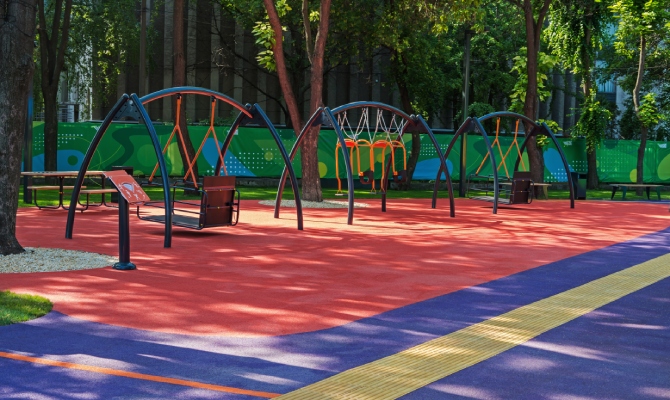
Creating a space where every child can play, socialize, and grow is critical when designing modern playgrounds. Inclusivity in playgrounds ensures children of all abilities can enjoy, learn, and engage in these spaces.
Through thoughtful design and key features, playgrounds can foster a sense of belonging for everyone. Here’s a closer look at some must-have playground features that promote inclusivity for all.
Accessibility That Welcomes Everyone
Accessibility is the foundation of any inclusive playground. Ramps are essential for children who use wheelchairs or mobility aids to easily move between different areas of the playground. Furthermore, tactile paths cater to children with vision impairments, featuring textured surfaces that guide their way.
Sensory play equipment, such as musical panels and sand play stations, provides experiences that engage children who benefit from non-traditional play structures. Integrating these features ensures that no child feels excluded from the fun.
A Safety First Approach
Safety is a universal priority, but for inclusive playgrounds, it’s about creating a welcoming environment where children can explore freely. Cushioned surfaces—such as rubber mats or shredded rubber—reduce the risk of injury from falls, which is critical for children of all abilities.
Clear sightlines allow caregivers to monitor their children easily and add an extra layer of assurance. Secure fencing creates boundaries, particularly for children who are prone to wandering, while also delineating a safe zone for exploration.
Encouraging Social Inclusion
Playgrounds are not just about play—they’re about making connections. Group play equipment, such as wide seesaws or merry-go-rounds, allows children of all abilities to interact and play cooperatively.
Buddy benches can encourage children to find play partners and reduce feelings of isolation. Incorporating shaded areas with seating creates perfect spaces for socialization and rest, ensuring children and their caregivers have a comfortable spot to engage or relax together.
Enriching Sensory and Cognitive Development
An inclusive playground should stimulate more than just the body—it should nourish the mind as well. Play structures that engage multiple senses, such as spinning sensory wheels or textured climbing walls, benefit children with sensory processing challenges.
Cognitive development is easy to encourage with interactive panels, mazes, or puzzles that challenge problem-solving skills. Incorporating sound, color, and movement in design supports a well-rounded developmental experience for all children.
Planning With Inclusivity in Mind
Building an inclusive playground requires looking at the big picture—from its borders to the equipment within. Start by designing pathways wide enough for wheelchairs or strollers and ensuring transitions between surfaces are smooth.
When choosing equipment, prioritize multi-functional pieces that cater to diverse needs, such as swing sets equipped with seats for different support levels. Bringing in the input of children, parents, and disability inclusion experts during the planning stage can further refine the design to meet real-world needs.
Inclusive playgrounds are more than spaces for fun; they’re spaces for building community and fostering growth. By including ramps, tactile paths, sensory equipment, and group play structures, you create an environment where every child feels valued and engaged. Start designing with inclusivity as the focus, and you’ll create a playground where these must-have features bring children and their families together.


