Dealing with Tire Blowouts: Safety Tips for Truckers
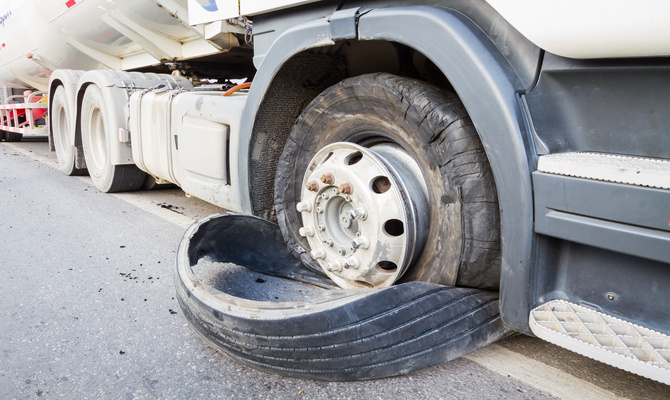
You know the sound. A loud bang cuts through the hum of the diesel engine, followed immediately by the violent vibration of the steering wheel. A steer tire blowout is one of the most dangerous situations an OTR driver faces, but panic is your enemy in this scenario. Safety requires quick thinking, muscle memory, keeping a cool head, and resisting your natural instincts. The following safety tips will help truckers like yourself deal with tire blowouts the right way.
Don’t Slam on the Brakes
Your body screams at you to stomp on the brake pedal the second you hear that explosion. However, doing so shifts the truck’s weight forward, destabilizes the rig, compounds the steering issues, and makes a jackknife highly probable. Instead, you need to maintain your speed or even accelerate slightly to stabilize the unit.
Keep a Firm Grip on the Wheel
If a steer tire blows, the truck will violently pull toward the side of the failure. Immediately, you must grip the wheel with both hands at the 10 and 2 o’clock positions. You need to lock your elbows, brace your body against the seat, keep your eyes on the road ahead, and fight the pull to keep the rig in your lane. Losing your grip could mean losing the truck.
Let the Rig Slow Down Naturally
Once you have control of the steering, let the drag of the flat tire slow you down. Avoid downshifting immediately, as the engine brake might cause the wheels to lock up, skid, or slide out of alignment. You should just take your foot off the accelerator and let physics do the work until you reach a manageable speed.
Signal and Move to Safety
Turn on your right turn signal once your speed drops below 30 mph. You need to scan the shoulder for debris, check your mirrors for traffic, look for a wide patch of pavement, and carefully guide the truck off the active roadway. Never stop in a traffic lane unless the truck absolutely refuses to move further.
Assess the Damage and Call for Help
The final safety tip for dealing with tire blowouts is to assess the damage and call for help. Turn on your hazards and set out your warning triangles before inspecting the shredded rubber. Sometimes, the damage goes beyond the tire itself; you might find the rim is bent, the fender is gone, the airlines are severed, or the mudflap bracket is twisted. In any case, it’s a good idea to call a mobile repair technician to make urgent repairs. They can come to you, fix your rig safely, and get you back rolling down the freeway ASAP.