A Quick Guide To Printing Custom T-Shirts at Home
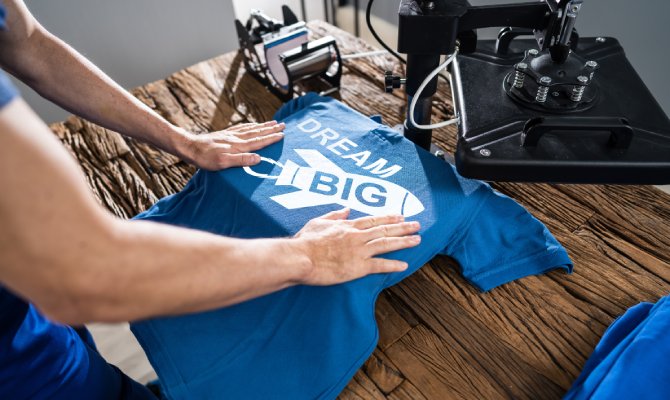
Are you making apparel for a work or sports team? Do you want matching outfits for your next family reunion? Or can you not find the T-shirt design you want in stores? For all these reasons and more, you might need to print custom T-shirts at home, which is easier than you might think. Use this quick guide to learn the basics!
How To Create Your Design
First, you need a standout design. Use software like Canva or Adobe Illustrator to sketch and finalize your concept. If designing from scratch feels overwhelming, look for ready-made templates or royalty-free graphics online to customize to your taste.
Stick with bold colors and clean lines since they tend to translate well onto fabric. Additionally, always consider the size and placement of your design on the T-shirt. And don’t forget to save your design in a high-resolution format for the best printing results.
Different Printing Methods You Can Use
There are a variety of methods available to help you print your design onto a T-shirt. Let’s look at some popular ones.
Iron-On Transfers
With iron-on transfers, you can print your design on special paper using an inkjet or laser printer. Then, you place the transfer paper onto the T-shirt and use a household iron to adhere it. This method is budget-friendly and great for beginners. However, the results might not be very long-lasting.
Screen Printing
Screen printing is a classic choice for vibrant, long-lasting prints. This technique involves pushing ink through a stencil or mesh screen directly onto the fabric. While it requires some equipment and practice, it’s perfect for creating bold, professional-quality designs.
DTF Heat Press
Direct-to-film (DTF) heat pressing uses a special printer to create a design on a film, which you then transfer to the T-shirt using a heat press machine. It’s essentially a higher-quality version of iron-on transfers. If you understand DTF heat press settings and practice a bit, you’ll be able to produce highly durable, vibrant prints on various fabrics in no time. If you plan to print frequently or have a large batch of T-shirts to complete, investing in a DTF heat press could be worth it.
Additional Tips and Tricks
Regardless of the printing method you choose, follow these tips to achieve the best results when printing custom T-shirts at home:
- Pre-wash your T-shirt to prevent shrinking after printing.
- Choose high-quality blanks for better printing results.
- Work in a clean, lint-free area to avoid blemishes on your design.
- Test your design on a sample piece of fabric first.
- Use parchment paper to protect your fabric during the heat press process.
- Apply consistent pressure with your heat press or iron.
- Store leftover transfer paper in a cool, dry place to maintain its quality.
With the steps outlined above and a bit of practice, you’ll soon produce high-quality designs that you can wear proudly.